Excess earnings of unlisted companies over and above their interest costs are at a record level. The interest-coverage ratio of 2.94 is the highest going back to 1990-91, according to numbers from the Centre for Monitoring Indian Economy (CMIE). The ratio measures earnings relative to every rupee to be paid as interest on outstanding debt.

Despite the Sensex's 74 per cent run-up over the past year, the Indian equity market could still reward investors if the expected revival in earnings materialises, according to market experts. Returns during the coming year are more likely to be in line with longer-term trends (the Sensex's five-year return is around 14 per cent). Several factors are expected to aid the market's performance this year.

Dollar flows in domestic markets are expected to continue but state-run banks are seen mopping the flows to boost RBI's foreign exchange kitty.

Demonetisation could see anywhere between Rs 8 and 12 lakh crore coming into the banking system in the next few weeks.

RBI's liquidity tightening stance had stumped the Street as a result of which bond yields had risen.

In 2021, there is the risk of interest rates spiking. Investors should tackle duration risk with a longer investment horizon, suggests Sanjay Kumar Singh.

Invest in liquid funds if you have a horizon of three months, ultra-short-term for six months, and low-duration funds for one year.

If you are in credit opportunity funds, income funds or dynamic bond funds for a long-term goal, stay put.

But this might not be the best time to enter these, as probability of further reductions in near future is low

One fear among regulators is that allowing side pocketing could lead to fund managers taking higher risks. Even in the US, side pocketing is not allowed in mutual funds, only in hedge funds

While debt funds have emerged as the flavour of the season, not all investors understand debt funds. So the best they can do is put trust in the fund manager and the fund house.
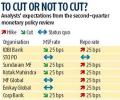
Analysts expect RBI to restore 100-bp corridor in Tuesday's policy review.
Nearly three-fourths of the debt money, as of April 30, 2019, was invested in securities with duration of less than three years.

To make sure liquid schemes reflect the underlying portfolio risks, Sebi has said all debt papers with maturity of 30 days or more to be marked to market. Earlier, fund houses didn't have to do so for securities that had less than 60-day maturity.